TEXAS TECH UNIVERSITY / CLASSICAL & MODERN LANGUAGES & LITERATURES

Dr. Olga Rodriguez-Ulloaf (Indiana University)
Dr. Rodríguez-Ulloa’s monograph Sadistic Cholas: Transfeminist Provocations in Contemporary Peru (University of Texas Press, in press), delves into a theorization of the racial slur “chola” from its earliest colonial uses, when cholas were defined as a mix of indigenous and black and as promiscuous heathens, to current appropriations of chola by queer performers, authors, and collectives that develop a transfeminist critique via their figurations of revenge in sex, aesthetics, and politics. The book ponders cholas’ migrancy to rethink their racialization as traversed by mobility and transientness. In this context, sadism becomes a retaliatory aesthetic weapon against coloniality and patriarchy, used to pierce the caste and class logics and invert the European origins of the term. Using a hemispheric critical framework that incorporates Black and Indigenous studies, feminist theory, and Andean intellectual history, the book also seeks to position cholas’ overlooked anti-colonial aesthetics within the fields of American and Afro-Latinx studies.
Rodríguez-Ulloa’s future research analyzes memoirs and activist episodes that articulate a critique of US imperialism produced by Andean migrant women living within the US. Having experienced Peruvian coloniality in the form of the hacienda system and its structural anti-Indigeneity, in conjunction with US financial, cultural, and military interventionism in the Latin American region, these women represent an embodied and insurgent knowledge that became more critical with their immigration to the north. The case studies focus on the 20th century, situated in the Puerto Rican independence movement of the 1920s, New York's 1950s/1960s beat generation, and the 1960s Red Power Movement in the Bay Area. A tentative title for this book is “Disobedient Migrants. Andean Women against US Empire.
Her publications have appeared in e-misférica, e-flux, the Journal of Latin American Cultural Studies, and the Latin American Literary Review among others.
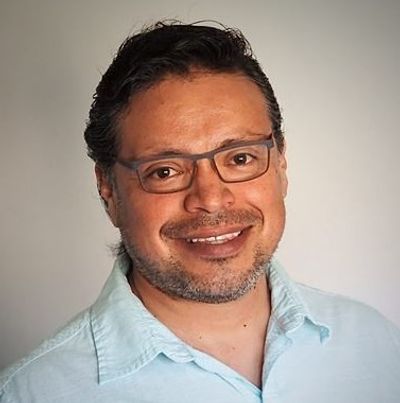
Dr. Diego Román (University of Wisconsin–Madison)
Dr. Diego Román is an Assistant Professor in Bilingual/Bicultural Education at the Department of Curriculum and Instruction at the University of Wisconsin–Madison (Fall 2019). Prior to this appointment, he was an Assistant Professor in Bilingual Education at Southern Methodist University in Dallas, Texas. Dr. Román holds a B.S. degree in Agronomy from Zamorano University in Honduras and a M.S. degree in Curriculum and Instruction from the University of Wisconsin-Whitewater. He also earned a M.S. degree in Biology, a M.A. in Linguistics, and a Ph.D. degree in Educational Linguistics, all from Stanford University. At the K-12 level, Dr. Román taught middle school science to English Learners and newcomer students for seven years, first in rural Wisconsin and then in San Francisco, California.
Dr. Román’s research interests are located at the intersection of linguistics, science education, and environmental studies. Specifically, he investigates the implicit and explicit ideologies reflected in the design and implementation of bilingual and science education programs particularly about environmental topics to multilingual students. He conducts his research from a Systemic Functional Linguistics perspective by analyzing the linguistic and multimodal characteristics of the discourse that take place in bilingual and science classrooms. Dr. Román has researched the language used to teach climate change at the middle school level and is currently leading an initiative that seeks to improve the quality of science, environmental, and bilingual instruction (Spanish/English and Kichwa/Spanish) in rural Wisconsin and Galapagos Islands, Ecuador.